Street and residential-road lighting: how spacing and optics shape results
A clear overview of the input data needed for residential-road, industrial-road and streetlight calculations in DIALux.
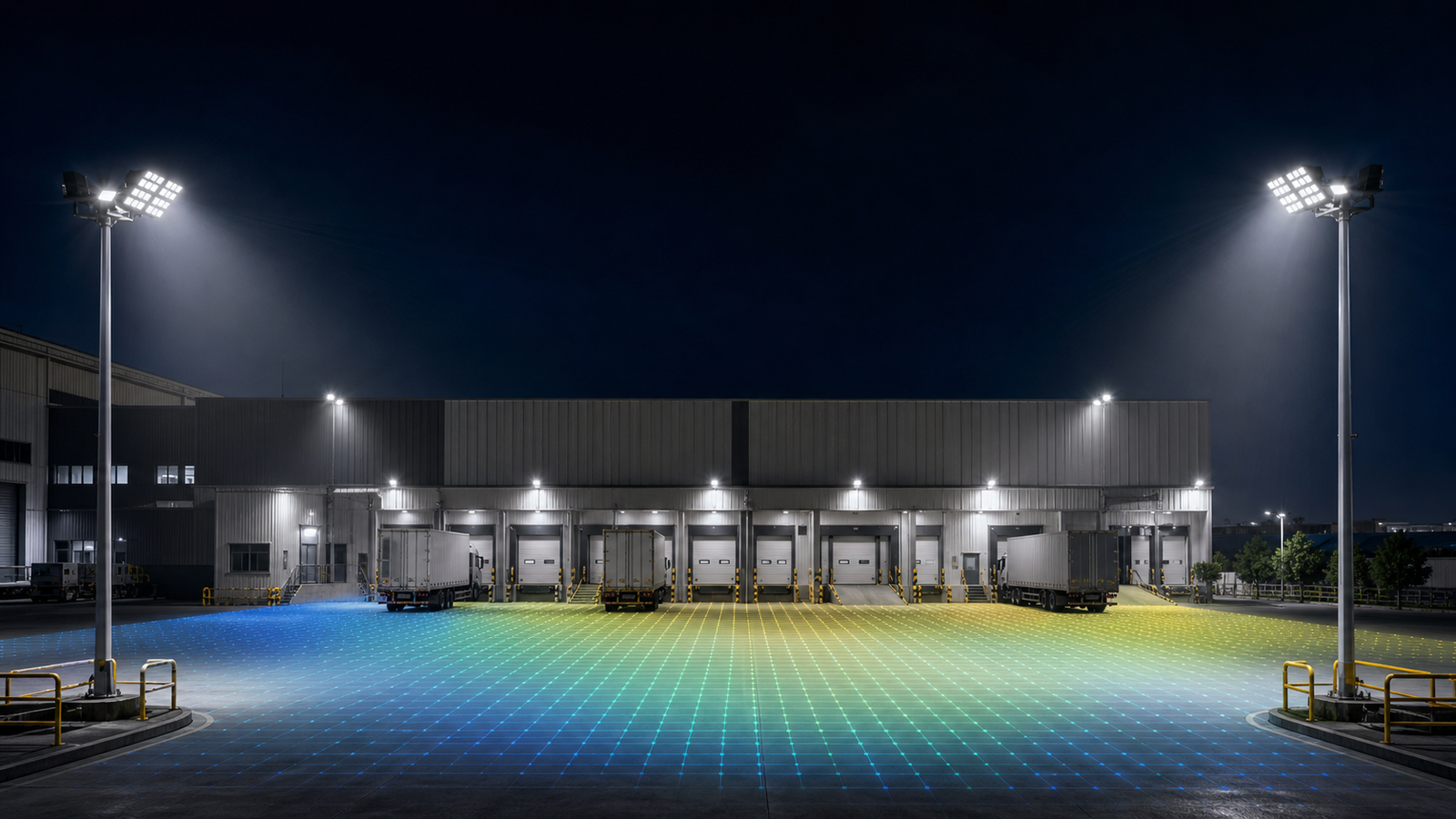
Road geometry drives the design
Road width, number of lanes, footpaths, median strips, pole positions and mounting heights all change the result. Two sites with the same luminaire can need different spacing and optics because their geometry is different.
A road-lighting study begins by defining the correct profile and evaluation areas, then testing a practical pole arrangement.
Think in terms of consistency, not maximum brightness
Good road lighting supports predictable visibility. Over-lighting can increase energy use and discomfort while still leaving poor uniformity if spacing is not correct. The most suitable answer balances the relevant performance targets with realistic construction and maintenance needs.
Information that improves a quote
Provide a road plan, section/profile, length, lanes, kerbs, footpaths, planned poles, required lighting class and preferred product data. This lets the lighting calculation concentrate on decisions instead of rebuilding missing project information.
Frequently asked questions
Can DIALux design street lighting?
Yes. DIALux supports street and road lighting workflows, including road profiles, luminaire arrangements and results for the defined evaluation fields.
Why does pole spacing matter?
Pole spacing directly affects light distribution, uniformity, glare and the number of luminaires required. It should be tested with the selected optic and mounting height.