DIALux lighting calculation service in South Africa: project guide
Professional DIALux lighting calculation support for projects in South Africa, including project inputs, local design conditions, report outputs and pricing scope.
When to use a DIALux calculation service in South Africa
LUXGRID supports lighting-calculation enquiries for warehouses, industrial plants, mining-support facilities, retail, roads and sports areas in Johannesburg, Cape Town, Durban and industrial or mining regions across South Africa. The service is delivered digitally: the project team sends the available drawings, luminaire data and performance requirements, and the agreed scope is modelled and reported for review.
A professional calculation is useful before product approval, procurement, tender comparison or installation. It tests how a proposed luminaire and layout perform in the actual geometry instead of assuming that wattage, lumen output or a previous project will produce the same result.
Lighting-calculation priorities for South Africa
South African projects can span controlled interiors, exposed industrial sites and large outdoor areas. Dust, corrosion, long operating hours, security tasks and neighbouring communities can influence product choice, aiming and maintenance.
Security and industrial visibility often require vertical or observer-relevant assessment, not only ground-plane lux. Outdoor schemes should review spill, glare, dark gaps and the practical reach of maintenance equipment.
What to send for a South Africa project
Provide plans, boundaries, security and work zones, pole or building mounting points, exposure conditions, exact luminaire files and the target schedule. Separate normal operation, emergency and security scenes where applicable.
The minimum useful package normally includes dimensions, mounting heights, room or site use, calculation targets and photometric data for the exact proposed product. IES, LDT, ULD or GLDF files are preferable to catalogue screenshots because DIALux needs the real light distribution, not only wattage and lumens.
What the completed report should explain
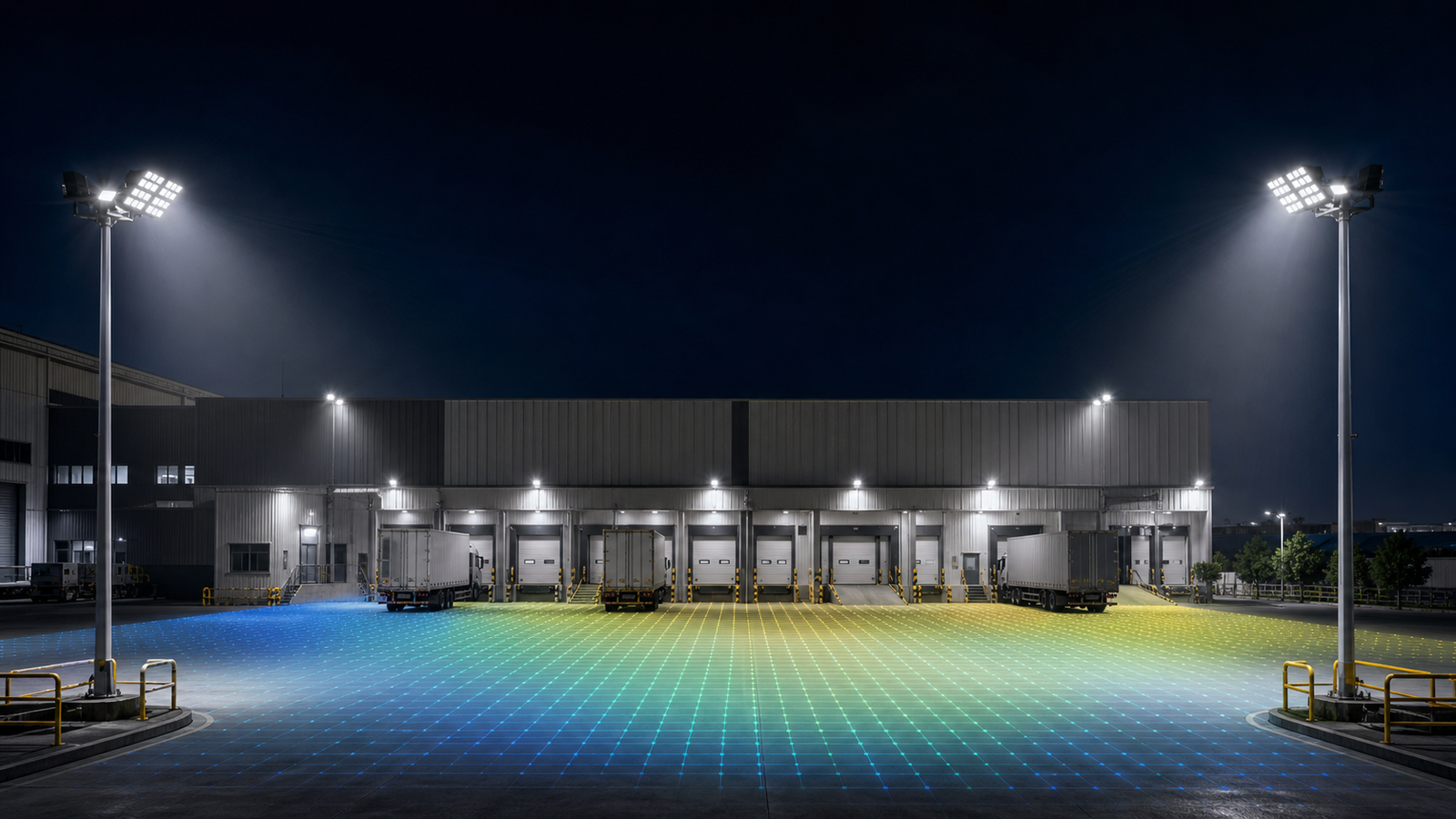
The agreed output can include luminaire positions, quantities, maintained illuminance, minimum values, uniformity, calculation grids, false-colour views, isolines, rendered views and the assumptions used. The relevant result set depends on whether the South Africa project concerns an office, warehouse, road, exterior area, sports facility or another specialised scope.
A quality check should confirm that the report uses the latest geometry and exact photometry supplied for review. It should also make exclusions and assumptions visible so the consultant, contractor, manufacturer or client can understand what the calculation does - and does not - demonstrate.
Standards, pricing and approval in South Africa
SANS, occupational, energy, municipal, environmental and client requirements may apply. The responsible South African professional should confirm the governing criteria for the project location and use.
LUXGRID prices the calculation around the real project scope: geometry, project type, number of areas, product options, result requirements, deadline and report complexity. A DIALux report supports a technical decision, but product approval, statutory compliance and final design responsibility remain with the appointed project professionals and authorities.
Frequently asked questions
Can LUXGRID provide a DIALux calculation service for a project in South Africa?
Yes. Project information and photometric files can be received digitally, allowing the scope to be reviewed, priced and delivered for projects in South Africa. Availability depends on the required deadline and completeness of the input information.
What information is needed for a lighting calculation in South Africa?
Provide drawings or dimensions, mounting heights, room or site use, target values, the exact luminaire files and any consultant, client or authority requirements that the report must address.
How much does a DIALux calculation cost in South Africa?
Pricing is project-specific rather than based only on floor area or luminaire count. The project type, geometry, number of calculation areas, product options, required outputs and deadline determine the quotation.